Dryer Taking Forever? Lint, Clogged Vents and Winter Fire Risk
If you notice your dryer taking too long to dry, you are not alone. In most homes the problem is not the dryer itself but the air path: lint, a clogged vent or a crushed duct. That same lint is also a real fire risk, and winter is when dryers work the hardest. Here is what to look for, what you can safely check yourself, and when it is time to call a technician.
Table of Contents
Dryer taking too long to dry? Signs to watch for
Watch for these signs:
- Two cycles per load. Towels or jeans are still damp after a full cycle, so you run the dryer again.
- Very hot cabinet or clothes. The top of the dryer or the clothes feel much hotter than usual. Heat is trapped instead of leaving through the vent.
- Burning smell. A smell of hot lint or burning while the dryer runs. Stop the dryer and do not use it until it is checked.
- Outside vent flap not opening. With the dryer running, the outside flap should open. If it stays shut, the vent is likely blocked.
Common causes
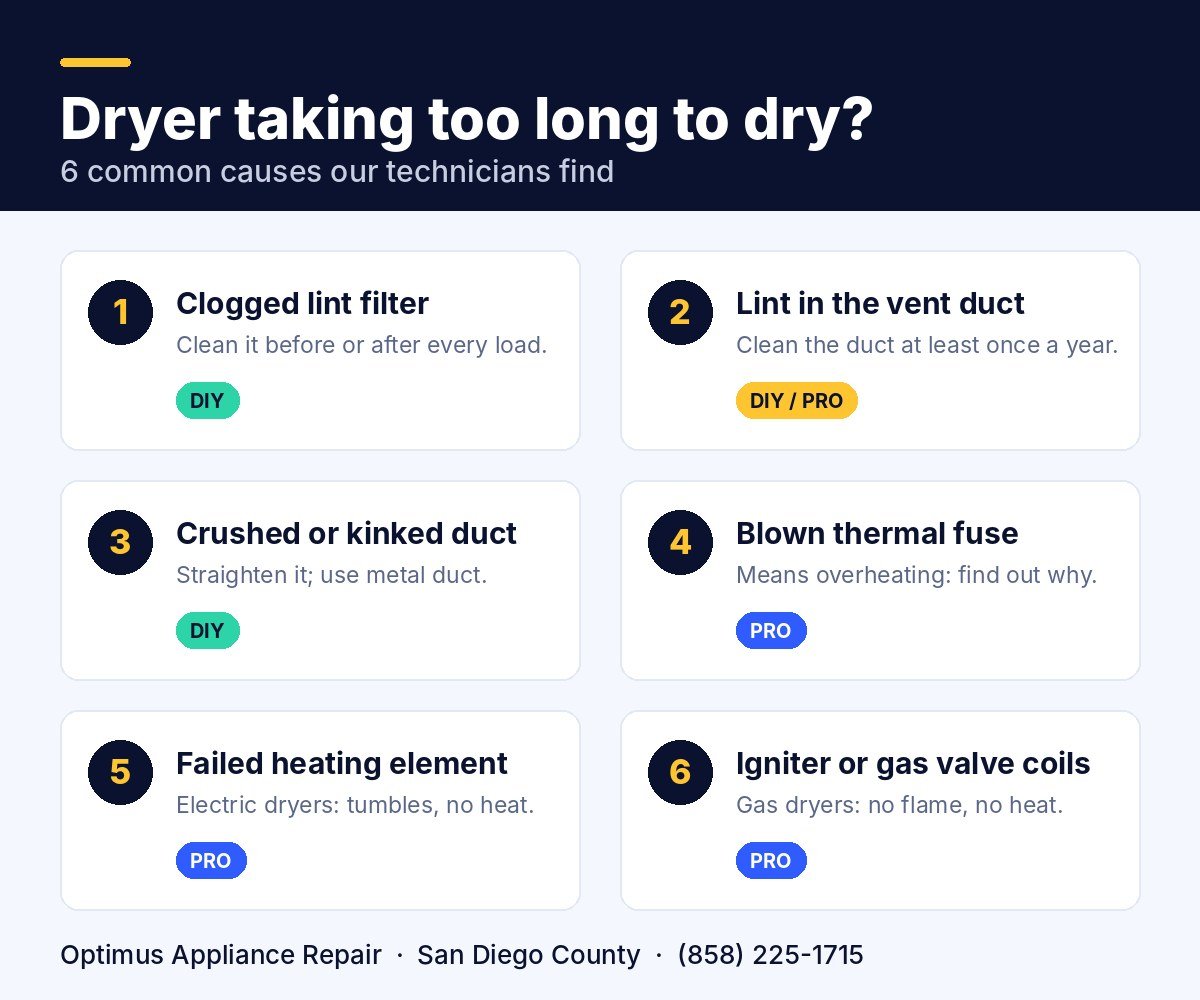
A dryer needs heat and airflow. When either is missing, you get a dryer taking too long to dry. The six most common causes:
- Clogged lint filter. A screen covered with lint blocks air from the very start of the cycle.
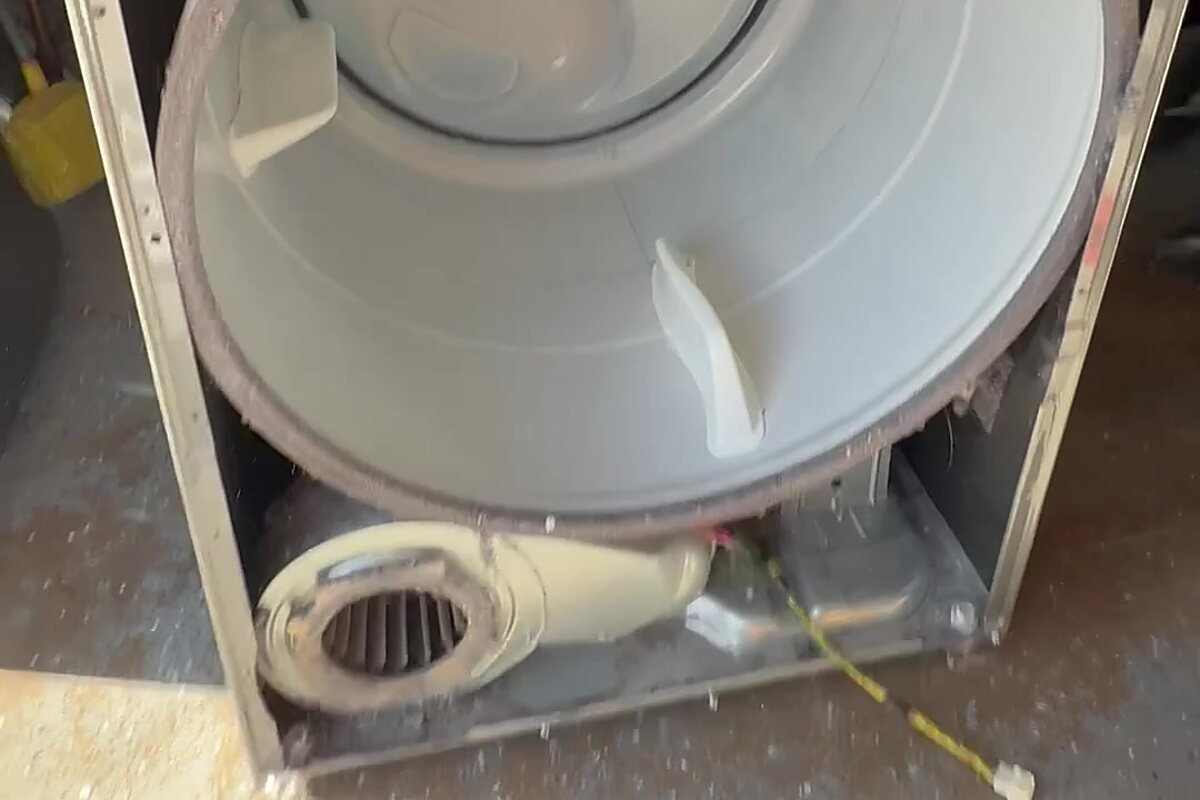
- Lint in the vent duct. Lint that gets past the screen builds up inside the duct over time.
- Crushed plastic or foil duct. Plastic and thin foil ducts get crushed when the dryer is pushed against the wall, and they trap lint.
- Blown thermal fuse. This safety fuse cuts off the heat (or the whole dryer) when it overheats. A blown fuse usually points to an airflow problem.
- Failed heating element (electric dryers). The drum turns but the air stays cool.
- Igniter or gas valve coils (gas dryers). A weak igniter or worn gas valve coils can light the burner for a moment and then shut it off, so the heat comes and goes.
Fire safety tips from NFPA
The National Fire Protection Association (NFPA) shares these clothes dryer safety tips:
- Failure to clean the dryer is the leading cause of home dryer fires.
- Clean the lint filter before or after every load.
- Clean the vent duct at least once a year, or more often if you notice your dryer taking too long to dry.
- Use rigid or flexible metal duct.
- Do not run the dryer when you leave home or when you go to bed.
- Have gas dryers inspected by a qualified professional.
You can read the full list on the NFPA Clothes Dryer Safety page.
Safe things you can check yourself
Before you check anything, unplug the dryer. On a gas dryer, do not move or touch the gas line.
- Clean the lint screen. Remove the lint by hand. Dryer sheets can leave an invisible film, so wash the screen with warm soapy water and a soft brush, then let it dry completely.
- Check the outside flap. Run the dryer and go outside. The flap should open and you should feel warm air.
- Straighten the duct behind the dryer. Pull the dryer out a few inches and make sure the duct is not crushed, kinked or pinched. If it is plastic or thin foil, plan to replace it with metal duct.
If drying is still slow after these steps, the problem is likely deeper in the vent run or inside the dryer itself.
How to clean your dryer vent, step by step
- Unplug the dryer (for a gas dryer, also turn the gas valve off).
- Pull the dryer out from the wall and disconnect the duct from the back.
- Remove lint from the dryer’s outlet and from both ends of the duct by hand or with a vacuum.
- Use a dryer vent brush to clean the inside of the duct.
- Go outside, open the vent flap, and clear lint and any blockage.
- Reconnect the duct without crushing or kinking it, push the dryer back, and run a short cycle to check the airflow outside.
If your duct is long, runs through the roof, or you see heavy lint buildup inside the dryer cabinet, it’s safer to have a technician clean it.
Is it really the dryer? Check your washer first
Sometimes the dryer is fine and the problem starts one step earlier. If your washer isn’t spinning fast enough, clothes come out much wetter than they should, and even a healthy dryer will need extra time. Pick up a load right after the spin cycle: if it’s dripping or feels very heavy, the washer may have a drain or spin problem.
Common signs: water left in the drum after the cycle, a loud or weak final spin, or error codes about draining. In that case, a washer repair will fix your dryer taking too long to dry. Learn more about our washer repair in San Diego.
When to call a technician
- Blown thermal fuse. A new fuse alone is not a fix. The fuse blew because the dryer overheated, so the cause must be found, or the new fuse will blow again.
- No heat. The drum turns but the air is cold. The heating element, igniter, gas valve coils or another part needs to be tested. See a real case: Maytag dryer not heating, fixed with a heating element replacement.
- Drum noise. Squeaking, thumping or grinding usually means worn rollers, a belt or an idler pulley.
- Gas smell. Do not use the dryer or any light switches. Leave home right away and call SDG&E or 911 from outside.
A dryer taking too long to dry wastes time and energy. We service gas and electric dryers across San Diego County. Learn more about our dryer repair in San Diego. And if your washer leaves clothes dripping wet, drying takes longer too, so see our washer repair page.
Dryer still slow? Book same-day dryer repair
$89.95 service call, credited toward the repair within 10 days. Repairs from $189 + parts. 30-day warranty. Call (858) 225-1715 or book online.
FAQ
Why is my dryer taking so long to dry?
The most common reason for a dryer taking too long to dry is lint: a dirty lint filter or a lint-packed vent duct blocks airflow. A crushed plastic or foil duct, a blown thermal fuse, a failed heating element (electric) or a bad igniter or gas valve coils (gas) can also cause it.
How often should I clean my dryer vent?
NFPA recommends cleaning the lint filter before or after every load and cleaning the vent duct at least once a year, or more often if drying takes longer than usual.
— The Optimus Appliance Repair team